
No Haskell 72-Hour Feed
No official Haskell County rolling 72-hour release view, three-calendar-day archive, public current roster, or sheriff jail app was verified. The county has not published a window rule, displayed fields, update schedule, retention period, or photo policy for such a feed. Those facts cannot be borrowed from another county. The three-day task must instead be framed as a records range.
Give the sheriff an exact start date and end date. Ask for release and transfer ledger entries within that range, then narrow by person if the office requires it. Review the Haskell court docket for bond, dismissal, release, sentencing, commitment, or revocation orders entered during the same span. Kansas VINE can add person-specific county-jail custody information, but it is not a public list of all releases.
Check Haskell Three-Day Releases
The three-day workflow differs from a quick daily call. Build a date grid first. Include each calendar date, the expected person or case, the source checked, and the outcome. That makes gaps visible around weekends and holidays. It also prevents a court order dated Friday from being mistaken for a completed jail exit that occurred later.
- Confirm that Haskell County Jail was the starting custodian. A conviction county alone does not establish where a person was held.
- Set a precise three-day start and end date. Contact the Haskell County Sheriff's Office and request the release or transfer entries for that bounded range.
- For each named person, check Kansas VINELink. Compare county and identity details before reading the custody status or event date.
- Search the Haskell criminal case and read the register of actions across the same period. Obtain a public order from the clerk when it is not online.
- Match the actual jail timestamp to the legal authority. A bond or release order may precede physical processing.
- Follow every destination. Use KASPER for KDOC commitment, the named receiving jail for a jail transfer, or the federal or immigration system when the record directs it.
Use Jail Releases: 24 Hours for a same-day inquiry. For a person-specific search that extends beyond three days, use the Haskell County released-inmate lookup.
Haskell Three-Day Record Fields
Haskell County's absent feed means no online field list can be promised. The following fields are appropriate targets for a focused request. Together, they establish chronology and route. They should not be described as fields that a current public web card displays.
| Field to request | Three-day use |
|---|---|
| Name and booking number | Separates people with similar names and links the event to the booking |
| Booking timestamp | Shows whether custody began before or during the range |
| Release timestamp | Places the actual exit within the selected three days |
| Release authority and type | Distinguishes bond, order, time served, dismissal, and transfer |
| Case and bond | Connects the jail event with the Haskell court record |
| Transfer destination | Identifies the next custodian when the exit was not a community release |
A booking photograph can remain part of a correctional record, but no current Haskell release-photo feed was found. Ask for a named person's photograph separately when relevant to the record request. No county-specific copy fee schedule was verified. Kansas public-records law permits reasonable fees and advance payment, so request an itemized estimate before authorizing cost.
Haskell Weekend Release Checks
The main value of a three-day range is chronology. A Friday court order, Saturday jail entry, and Monday database update may all refer to one custody change. None should be treated as the same timestamp. Court staff availability, agency processing, and public-system updates may also differ on weekends or holidays, but no Haskell-specific weekend-release policy was found.
Read records in sequence. First note the court's authority. Next obtain the jail's actual release or transfer time. Then check the receiving system when a destination appears. KASPER updates each working day, so a weekend KDOC movement may not display at once. VINE depends on participating jail data and can lag as well. Recheck after the next update when the event is very recent.
| Evidence | What it means | What it does not prove |
|---|---|---|
| Court release or bond order | Legal authority for release | That jail processing is complete |
| Sheriff release timestamp | Departure from Haskell custody | That no transfer or supervision remains |
| VINE custody change | Change in reporting county-jail status | The full reason or destination |
| KASPER status | KDOC custody, supervision, or discharge stage | A local jail-only release |
Note: A longer date range improves coverage, but it does not turn separate agency records into an official Haskell County 72-hour list.
Request Haskell Release Records
Kansas Open Records Act procedures provide the formal fallback when no public feed exists. K.S.A. 45-218 addresses access and requires a prompt agency response under the statute, although production time depends on the request and any lawful review. Ask for segregable, nonexempt portions if part of a record is withheld. Request the specific statutory basis for a denial.
A strong request names the person when known, gives the three-day span, and asks for the booking and release or transfer ledger entry. Include the release timestamp, release type, authority, booking number, case, bond, and destination. Ask for electronic delivery and an itemized fee estimate. Avoid an open-ended request for every investigative document connected with an arrest.
The official KORA access provision is the source for the request framework.
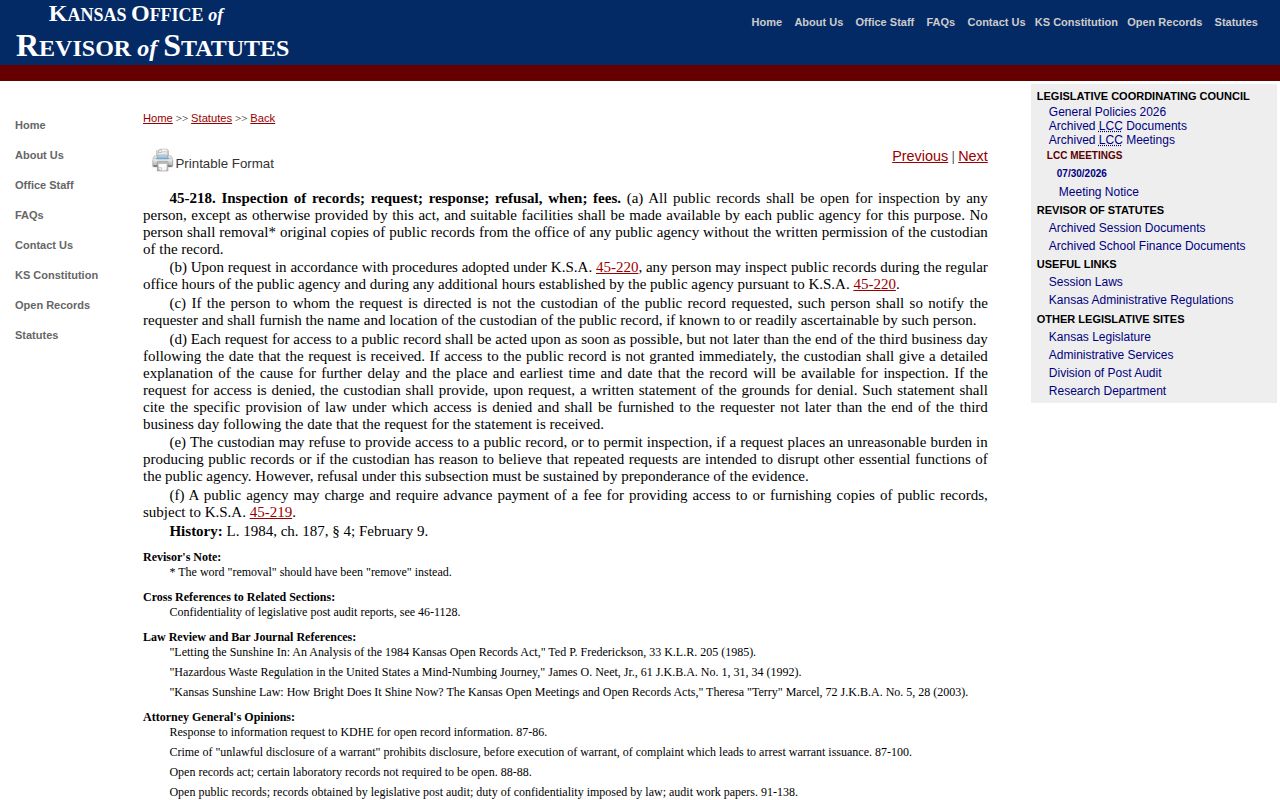
That statute supports a focused records route when Haskell County offers no public three-day release feed.
Trace Haskell Release Destinations
“Released” is not one outcome. Bond, recognizance, dismissal, court order, and time served can end local confinement. A transfer merely moves custody. KDOC commitment moves the search to KASPER. A federal or ICE hold moves it to a specialized system. Death in custody is never a community release. The sheriff's destination field and the court disposition keep those outcomes distinct.
- Bond release
- Departure under bond and court conditions while the case may continue.
- Time served
- Completion of the confinement ordered in that case, though another duty may remain.
- Transfer
- Exit from Haskell County Jail into another custodian's control.
- Discharge
- Completion of the full sentence obligation, not merely physical release.
If a record names Seward County, confirm the specific person with that facility. The regional jail contact is only a conditional lead; research did not establish that all Haskell detainees are housed there. The Cimarron Basin office serves Haskell County for community corrections, but supervision is not jail custody.
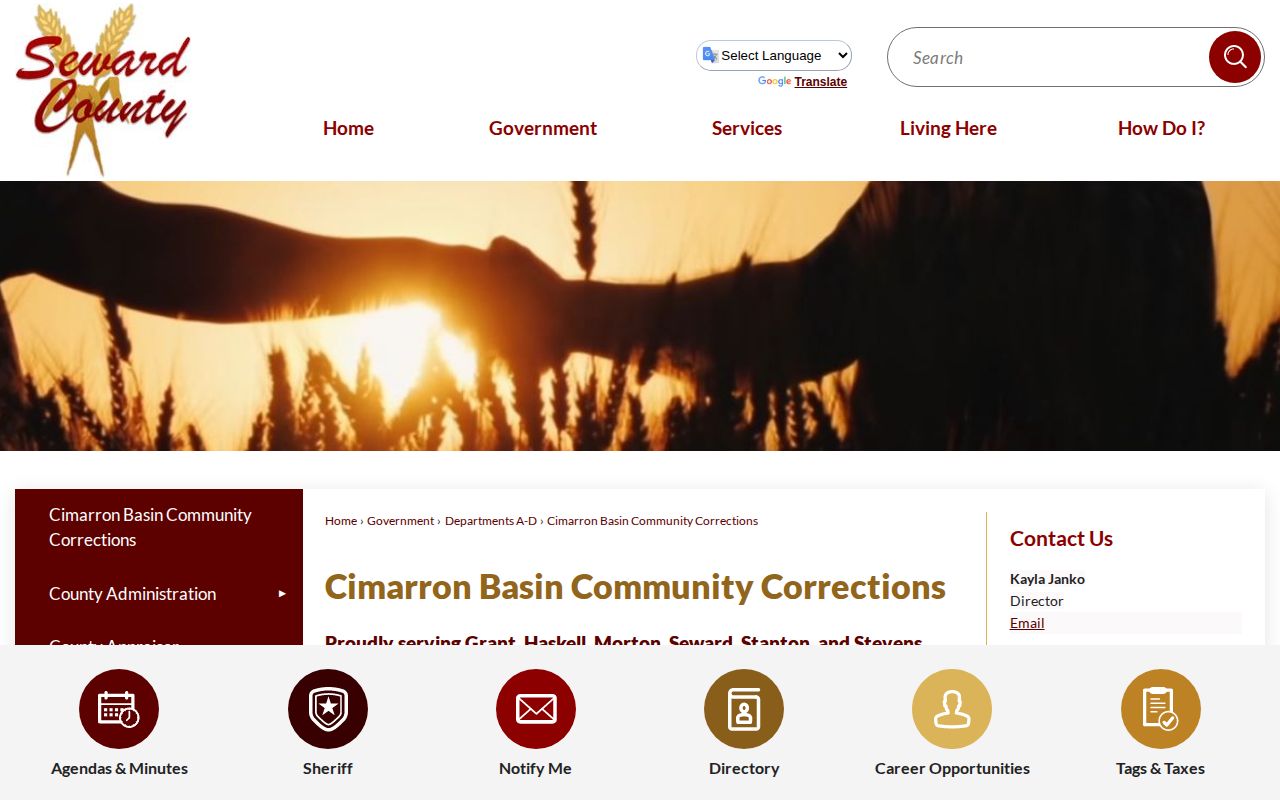
The regional listing helps route a court-supervision result after release without confusing it with a detention-facility transfer.
Verify Kansas Haskell Results
Search engines frequently replace Haskell County, Kansas with Haskell County, Oklahoma results. Stigler is not the Haskell County Jail in this project. Cimarron County, Oklahoma and Sublette County, Wyoming are also wrong. Confirm that a source identifies Kansas, Sublette, the 620 area code, or an official Kansas government domain before relying on it.
The county's newer web presence remained limited during the research sweep. An older sheriff path did not yield a verified current feed, and no agency-authorized mobile app was found. Do not infer a release archive from the former Current Inmates structure. A current roster, even if one returns later, would show who remains in custody rather than necessarily preserving who left during the prior three days.
The right response to the sparse web footprint is a more precise record trail: sheriff entry, Kansas VINE event, Haskell court docket, then the receiving system only when the first records show a transfer. Record each access date because public status can change.
Haskell Three-Day Verification Limits
A no-result does not prove that no release occurred. Check spelling, aliases, date of birth, case number, arresting agency, and all three dates. Protected juvenile matters, sealed records, expunged records, and other confidential material may not appear. If sources conflict, ask the office that created the record to explain or correct it in writing.
Keep a dated copy of each agency response. It preserves the exact period searched and makes a later update easier to reconcile.
Keep the final conclusion narrow. “Left Haskell County Jail by bond,” “transferred to a named agency,” and “KDOC sentence discharged” describe different facts. Avoid saying someone is simply free until supervision, detainers, and other custody systems have been checked.
FCRA use restriction: Three-day release records may support custody confirmation, personal knowledge, court processes, and focused records requests. They may not be used for an FCRA-regulated decision.
Public Record Search
Sponsored Results